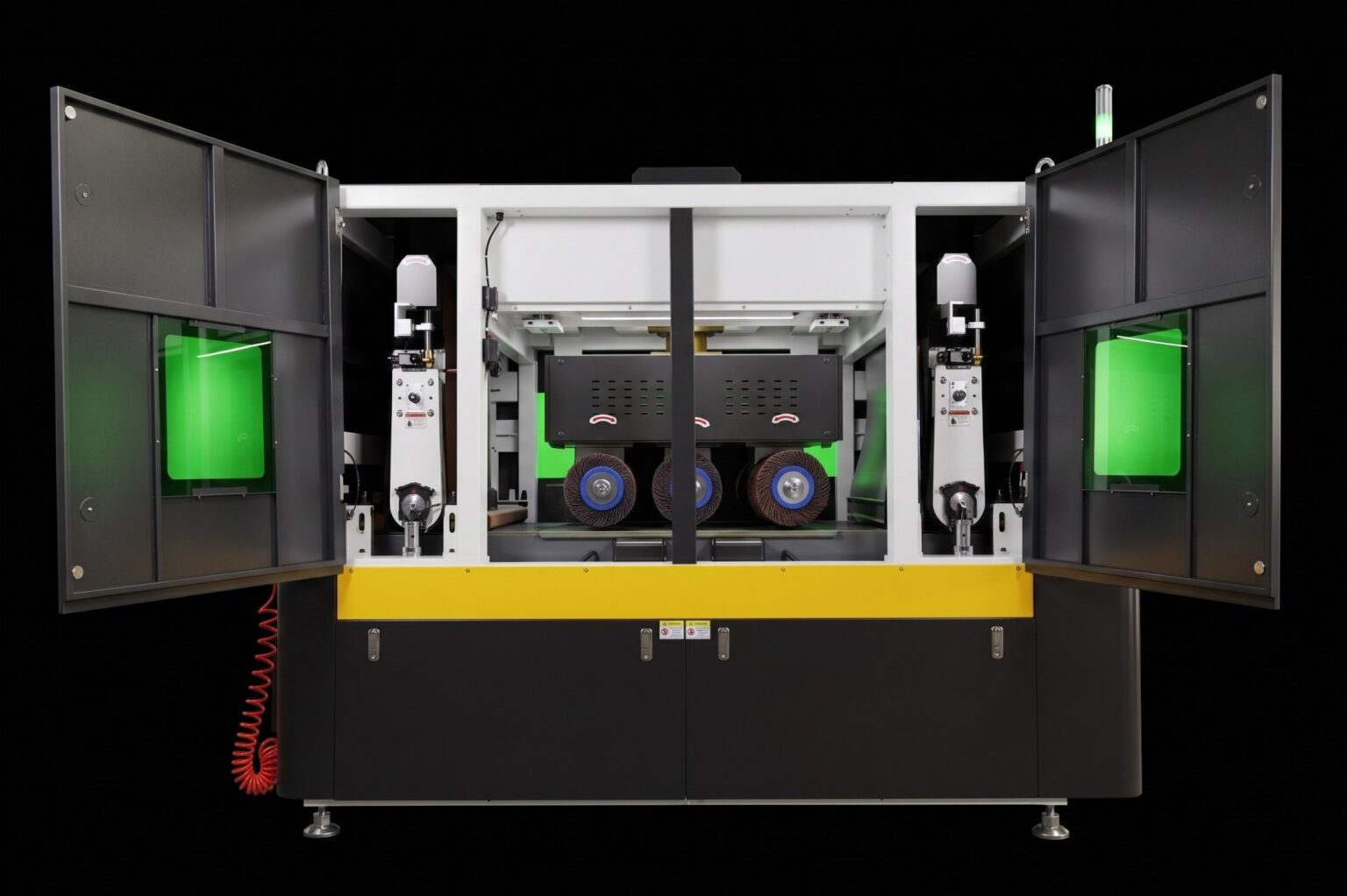
Are your operators spending too much time on manual Sheet Metal Deslagging tasks?
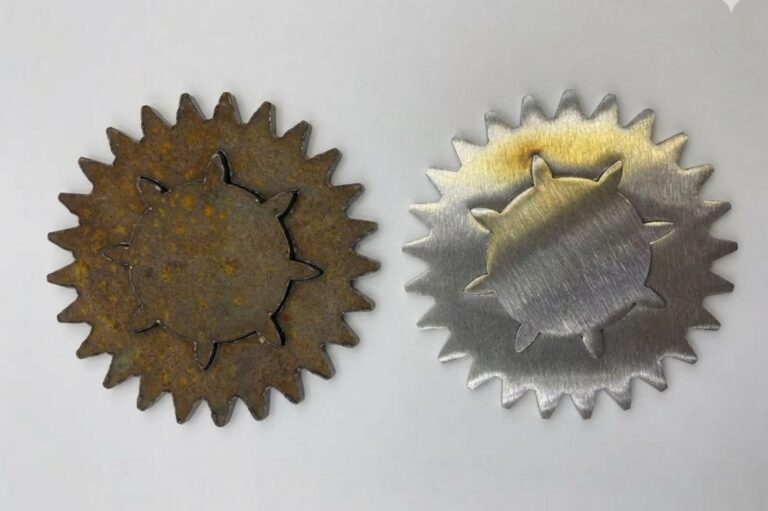
Commencing this extensive examination involving intelligent apparatuses engineered focused on surface finishing offer revolutionized engineering procedures, delivering marked benefits towards velocity and precision. This article examines the broad types of systems, comprising polishing polishing machines, linear appliances, and modern intelligent methods. We will delve into the upsides of incorporating these systems, including cut manpower requirements, augmented part consistency, and strengthened throughput levels.
Rim Rounding Instruments: Definite Polishing Described
Contour rounding apparatuses offer a state-of-the-art solution for producing specific finalizing on parts. Differing from manual styles, these robotic tools yield consistent performance and markedly elevate manufacturing performance. The machines habitually utilize multiple wearing mechanisms like revolving cutters, honing rollers, or particular outlines to remove sharp corners and sharpness. Such function is fundamental in a expansive set of domains, containing flight and electronics.- Enhance part appearance
- Cut processing outlays
- Raise productivity and capability
Dross Extraction Systems: Achieving Unblemished, Exceptional Exteriors
Present-day metal processing activities regularly generate significant amounts of slag, a byproduct that, if overlooked, can severely weaken the integrity of the output. Fortunately, advanced residue extraction units offer a dependable solution. These custom machines, employing techniques like scraping, are designed to painstakingly eliminate this unwanted material, ensuring a pure and top-tier surface. The resulting upgrades include minimized rejection rates, better aesthetic appeal, and an overall improvement in fabrication rate. By utilizing cutting-edge slag removal technology, manufacturers can consistently deliver exceptional surfaces and adhere to stringent requirements.
Sheet Fabrication Finalizing: The Benefits of Deburring Machines
Realizing a top-level finish on sheet metal segments is crucial for performance, and deburring tools deliver meaningful strengths over hand methods. Discarding burrs promptly not only magnifies the superficial quality of the product, but also blocks possible complications during processing and functioning. Besides, automated deburring approaches improve operation speeds and curtail labor outlays.
Elevating Sheet Metal Production with Automatic Deburring
With the aim to elevate performance in sheet metal creation, adopt intelligent deburring solutions. Physical deburring is often arduous and exposed to variations. Utilizing self-operating deburring affords meaningful benefits, comprising diminished labor costs, enhanced manufacturing caliber, and increased output volumes. These spending may efficiently produce sheet metal edge rounding solutions results.Picking the Best Deburring Tool for Your Endeavor
Determining the optimal deburring tool for your specialized needs comprises a thorough assessment of several considerations. Primarily, examine the variety of material you're processing – steel requires distinctive techniques than synthetic. Later on, reflect upon the size and shape of the components needing burr removal. Concluding, consider your workload level; a bulk operation asks for a custom type of mechanism than a low-volume one. Failing to account for these aspects can lead to suboptimal results and higher expenses.
Deburring Unit Method: Progressions and Enhancements
Latest burr elimination tool procedure is encountering rapid advancement, prompted by the required for higher precision and output in activities methods. Noteworthy movements highlight the adoption of robotic devices for flexible finishing activities, alongside enhancements in buffing technique. We're in addition observing a acceleration in easily carried edge finishing units catering for focused functions, and cutting-edge processes like thermal finishing are gaining support. The vision indicates towards expanded linkage of edge-removal mechanisms within the intelligent workshop location.
Upgrading Metal Segment Reliability with Profile Beveling
Many manufacturing processes for copper parts introduce sharp edges, which can cause stress regions and flaws that weaken overall strength. Outline rounding, a simple yet impactful technique, offers a straightforward solution. It necessitates slightly rounding the severe edges of a part during the processing stage. This reduces stress spots, improves functional effectiveness, and can stop snapping. Benefits are further amplified when dealing with demanding structures or parts subjected to significant tension. Considerations include the appropriate arc of the smoothed side and its consequence on combination with other parts.
- Lowers Stress Regions
- Enhances Performance Ability
- Avoids Splitting
Scale Elimination vs. Deburring : Distinguishing the Differences
Whereas many craftsmen use the titles “slag extraction” and “deburring” concurrently, they identify distinct methods in metal processing handling. Edge removal focuses on clearing the sharp, often tiny, outgrowths created during milling operations—these are excess substance of stock left on the unit. Byproduct purging, conversely, addresses this waste – typically a concoction of unwanted elements – that manifests during processes like welding. Essentially, deburring deals with leftover rims, while slag extraction deals with that offshoot of a varied function. To conclude, mechanized deburring and scale removal mechanisms are necessary components of modern metal industrial that secure excellent finished products with cut defects and refined efficiency.Summarizing the report asserts the notable role of high-tech automated deburring technologies in boosting construction requirements and driving businesses gain boosted productivity and caliber.